For pregnant women living in rural and remote Western Australia, access to maternity care often depends on whether there is a midwife available in their community.
When there isn’t, the consequences can be significant. Women may need to travel hundreds of kilometres for antenatal appointments, relocate away from family and support networks in the final weeks of pregnancy, and give birth far from home. The financial and emotional costs can quickly build – particularly for Aboriginal families and those living in some of the state’s most remote regions.
In 2025, the Office of the National Rural Health Commissioner released the second edition of the National Consensus Framework for Rural Maternity Services, reaffirming the importance of continuity of care, culturally responsive services and place-based models of care designed around the needs of individual communities.
However, recent media reports highlighting the closure of private midwifery services in regional Western Australia have reinforced concerns about continuity of care and ensuring women can access continuity of maternal care close to home.
Without a skilled and sustainable workforce, access to maternity care becomes almost impossible. This means it is critical to invest in the health professionals already living and working in regional communities, help them expand their skills, strengthen their confidence and support them to build rewarding long-term careers in the country.
“Every expectant mum deserves access to high-quality maternity care,” Rural Health West, Chief Executive Officer Professor Catherine Elliott said.
“Supporting rural and remote midwives to develop advanced skills is one of the most effective ways we can strengthen maternity services and ensure that the lives of pregnant women aren’t disrupted during pregnancy simply because of their postcode.”
One way Rural Health West is contributing to that goal is through the Australian Government Department of Health, Disability and Ageing-funded Health Workforce Scholarship Program (HWSP), which helps regional health professionals access training and professional development opportunities that might otherwise be financially out of reach.
For Geraldton Regional Aboriginal Medical Service (GRAMS) Endorsed Midwife Sarah Dawson, the scholarship has had a direct impact on both her professional confidence and the care she can provide.
“Being ‘with woman’ throughout this lifechanging and often highly vulnerable time of life is an honour. I’m constantly in awe. It’s the best profession in the world,” Sarah said.
Sarah’s work requires a broad skillset and a high degree of autonomy. Through the HWSP, she recently completed an obstetric ultrasound course which has expanded the services she can provide locally.
“It’s made a huge difference to the care I can provide. Instead of waiting for radiology or sending women elsewhere for dating scans and foetal wellbeing checks, I can do a bedside ultrasound and get the information I need straight away.
“If I can spot that something isn’t quite right earlier, I can make decisions and escalate care sooner. That means safer, better care for both mum and bub.”
The experience is echoed by fellow GRAMS midwife Kaitlyn Trindall.
Originally drawn to midwifery with aspirations of working for the Royal Flying Doctor Service, Kaitlyn found she preferred caring for women across their whole pregnancy journey.
“Working with Aboriginal women and being able to carry out continuity of care from early pregnancy until after mum has birthed is incredibly satisfying,” Kaitlyn said.
Through the HWSP-funded ultrasound training, Kaitlyn can now perform first and third trimester scans at the point of care.
“Being able to perform point-of-care ultrasounds means I can provide much more complete care during a single appointment. For many of the vulnerable families I work with, getting to another service for imaging just isn’t easy because of the cost, transport or other responsibilities they’re juggling.
“If I can do the scan there and then, we’re not missing opportunities to pick up problems early or delaying care while someone waits for another appointment. It makes a real difference to the women and families I look after.”
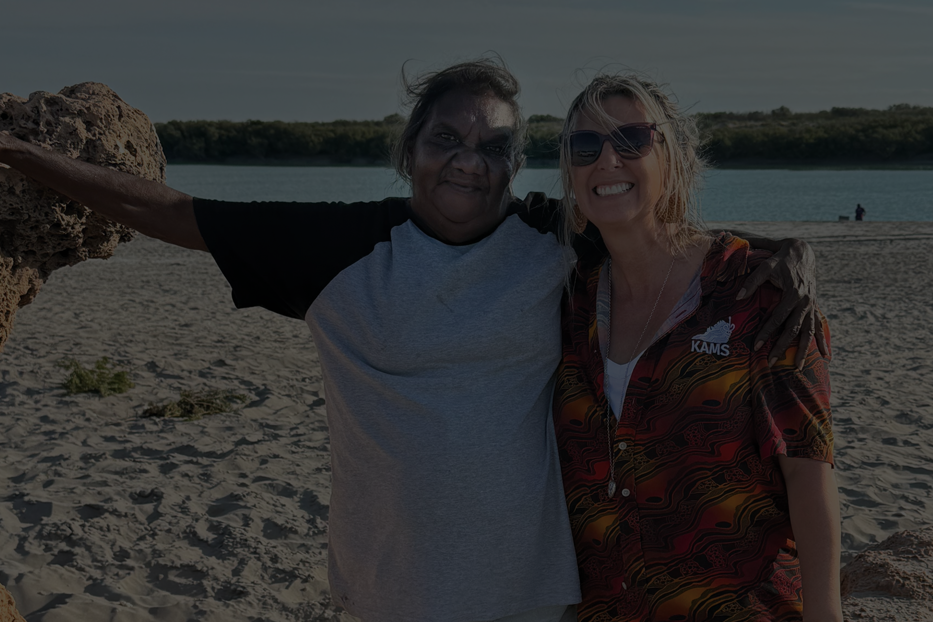
Megan Chidgey, Executive Manager Remote Services at Kimberley Aboriginal Medical Services, says working as a midwife in the region is highly rewarding.
“I love the cultural experience that working in the Kimberley brings, and the privilege of supporting women through such a sacred journey in their lives,” she said.
“Being welcomed into that space and walking alongside women and their families is something really special.”
For Megan, the HWSP funded obstetric ultrasound course has strengthened her ability to make timely clinical decisions and improve access to local care.
“Training in obstetric ultrasound has enabled me to use ultrasound as a powerful engagement tool. By allowing women to see their developing baby, it helps strengthen the bond with their unborn child and supports positive health decisions throughout pregnancy.
“Using early ultrasound at a woman’s first presentation helps me determine the most appropriate timing for formal ultrasound examinations and identify women who may require earlier specialist review. In the remote communities where I work, travel to regional services can be challenging, making this a valuable tool for supporting timely, coordinated care and reducing unnecessary travel.
While it does not replace formal diagnostic ultrasound, it assists me in guiding referral pathways and ensuring women receive the right investigations at the right time.”
The next HWSP funding rounds will be open 3-23 August 2026 and 26 October-15 November 2026.
ruralhealthwest.com.au/hwsp