
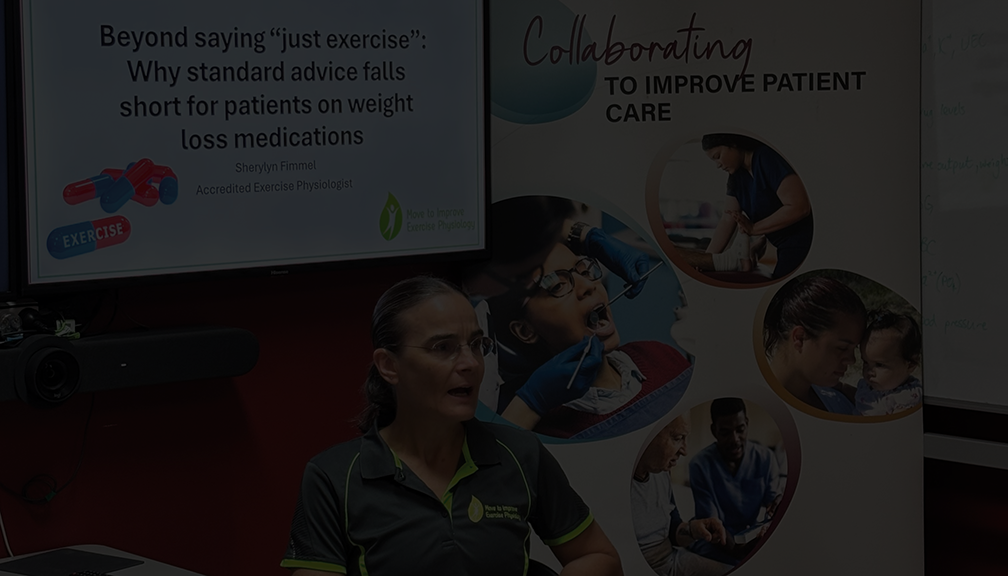
In the Kimberley, the need for preventative health care is visible everywhere – in hospital wards, on sporting fields, and in the quiet signs of deconditioning seen in everyday life. Yet for one exercise physiologist based in Broome, the frustration is not a lack of opportunity to make a difference, but a system that makes access to support difficult for the people who need it most.
Despite working in a region with high rates of chronic disease and significant unmet health need, Sherylyn Fimmel’s private exercise physiology practice – Move to Improve Exercise Physiology – largely serves a narrow cohort – predominantly white, middle-class clients with the capacity and expectation to pay for care. Meanwhile, many Aboriginal and low-income residents, who could benefit most from structured, supervised exercise interventions, remain locked out.
“The expectation in Broome is very different to the city,” she explained. “People have seen a surgeon for free. They’ve seen a cardiologist for free. So there’s a strong expectation that all health care should be free – because so much of it is delivered that way here.”
That expectation, she says, isn’t unreasonable. In remote and regional settings, many services are publicly funded or delivered at no cost to patients, particularly through hospitals and Aboriginal Community Controlled Health Organisations (ACCHOs). But exercise physiology currently sits outside that model.
“It creates a systemic issue,” she said. “The people with the least capacity to pay are often the ones with the greatest need – but they’re the least likely to access exercise physiology services.”
Preventative health on the margins
Her frustration deepened during a period working as an orderly in the local hospital. From that vantage point, the need for early, preventative intervention was impossible to ignore.
“You see people deconditioning in front of you,” she said. “You see the missed opportunities – moments where a simple conversation about movement, strength, or confidence could make a difference.
“In the Kimberley, people often travel long distances to access care, so hospital stays and appointments are a real opportunity to engage patients.
“People can spend hours in bed and become deconditioned, but there’s so much that can be done in that time – simple exercises, movement, and education that can be built into daily life. Even small things done in a bed or chair can make a difference.
“Patients might take that knowledge back to community and use it – or they might not. But if they’re not given that opportunity in the first place, there’s no chance at all.
“There are many low-cost, high-impact interventions that can prevent people from deteriorating in the hospital setting and reduce longer-term demand on acute services.”
Sherylyn believes exercise physiology is not yet used to best effect within the broader health system – particularly in regional and remote areas. While exercise physiologists are employed in select settings, such as cardiac rehabilitation and mental health services in metropolitan hospitals, equivalent roles aren’t available in the Kimberley.
“There’s so much evidence about the benefits of what we do,” she said. “Exercise can offset cardiometabolic effects of medications, support recovery, and improve quality of life. But there just aren’t enough of those roles in place yet.”
Even within ACCHOs, where preventative and culturally responsive care is a core principle, exercise physiologists are not routinely embedded.
As a result, preventative health is often crowded out by more immediate clinical priorities. “We’re reacting, rather than planning,” she said. “But so much can be done if we invest earlier.”
Small wins, big impact
When exercise physiology is accessible, the impact can be profound. Sherylyn points to her prior work with cardiac rehabilitation patients. Throughout the program patients attended a dedicated cardiac rehab gym, building strength, confidence and routine.
The benefits of exercise aren’t just physical. Structured exercise plays a critical role in supporting mental health, particularly for people managing complex conditions or recovering from major health events. “Exercise gives people something they can succeed at,” she said. “It might start with four reps, then five.”
“That sense of achievement matters. It builds momentum and that can be powerful.”
Sherylyn is increasingly involved in community-based initiatives – volunteering her time to support warm-ups and cool-downs for local groups, and sharing research with community organisations to encourage safe, inclusive participation in physical activity.
One example is her involvement with a community group, Silent Beats, where movement is as much about social connection as physical health. “It’s voluntary, it’s social, and it works.”
“You see people engaging because it feels accessible and welcoming,” she said.
A system ripe for change
Sherylyn has been actively campaigning in the region about the need to better integrate exercise physiology into regional health services. Her argument is simple – the system already bears the cost of preventable decline.
“We talk a lot about public health,” she said. “But if we’re serious about it, we need to also fund preventative care.”
In the Kimberley, where climate, remoteness and socioeconomic factors all shape people’s ability to stay active, tailored and locally delivered exercise physiology is not a luxury – it’s a necessity.
“People here want to move. They want to feel strong. They just need the support to do it safely,” she said. “I can’t get enough of exercise – because I see every day what it can do. The challenge is making sure the system lets the right people access it.”