
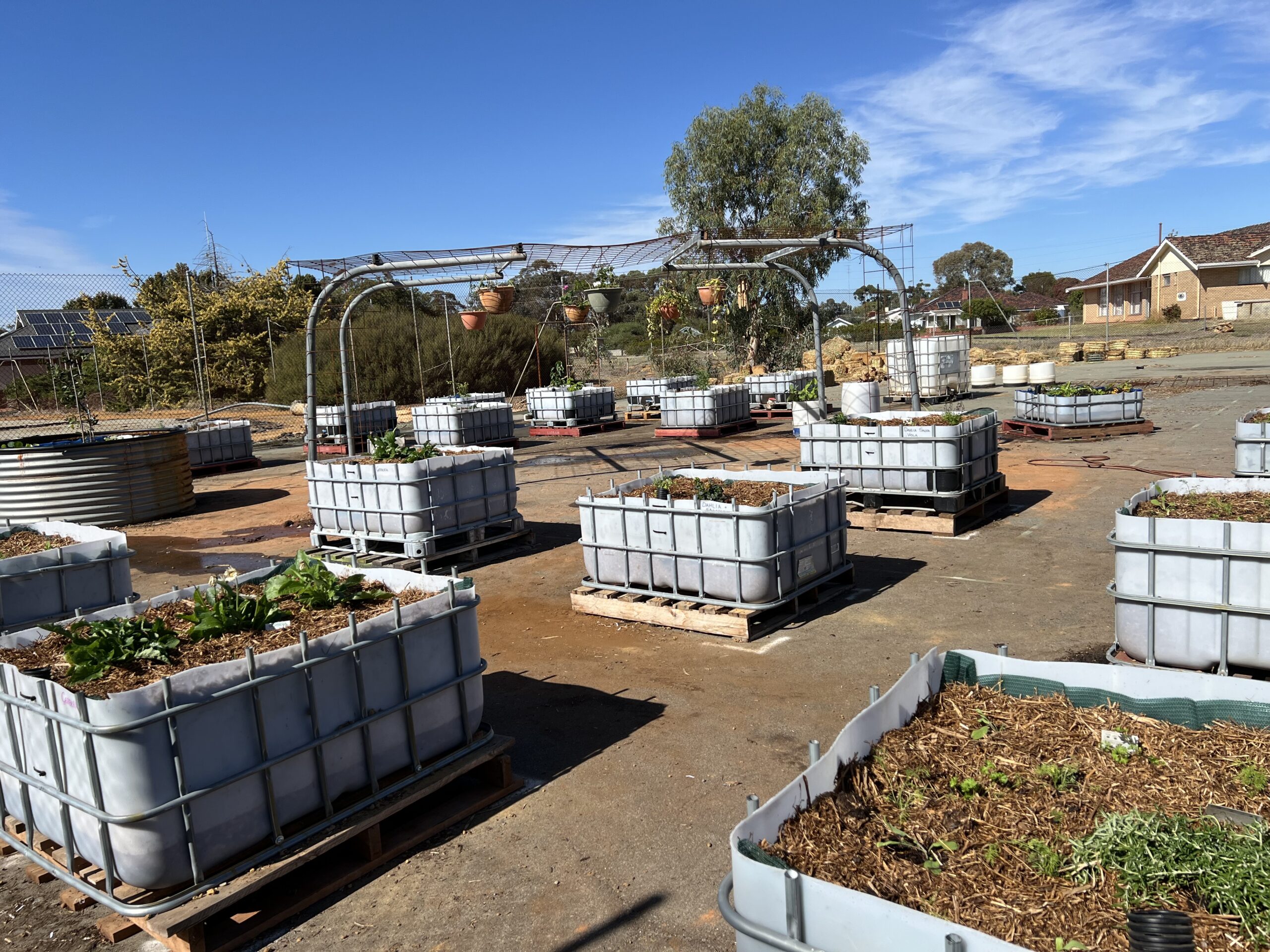
What began as a simple conversation about community has grown into a powerful lesson in rural health, belonging and place-based care. In the Wheatbelt town of Brookton, a disused tennis court has been transformed into a thriving community garden – not by contractors, but by local volunteers working alongside third-year Curtin University medical students on a non-clinical rural placement.
Over three autumn days in 2025, the students joined community members to shovel gravel, haul mulch and build garden beds from repurposed fertiliser containers. Together, they achieved in days what could have taken locals more than a year.
The project formed part of Curtin Medical School’s Rural Health Community Engagement Program, which immerses students in rural life beyond the clinic. These placements help students understand the joys and the challenges of living rurally, through practical, community-driven experiences.
For many students, including third-year medical student Cassidy Young, the link between a community garden and rural medicine seemed quite tenuous.
“At first, gardening felt a long way from clinical medicine,” Cassidy said. “But that changed very quickly.”
Over the course of the placement, students shared meals, listened to stories of life on the land and experienced first-hand the strength of rural social networks. The garden became a focal point not just for planting, but for connection.
“It became clear that community itself is actually quite central to rural health,” Cassidy said. “You can’t understand rural practice without understanding the people, relationships and shared effort that sustain towns like Brookton.”
The idea for the garden dates back to 2019, when around 50 residents attended a Shire meeting to discuss the concept.
“For a town of only 1,000 people, that was a huge turnout,” said local volunteer Joy Reiter. “It showed how strongly the community felt about creating a shared space.”
Progress was gradual at first, gaining momentum after COVID-19, before receiving a further boost when Curtin Medical School proposed involving students.
“They helped establish a new therapeutic garden area with bush tucker and herbs – it practically appeared overnight,” Joy said. “The students were so motivated. We’re really looking forward to welcoming them back.”
Curtin Medical School Associate Professor Keith McNaught saw the project as an opportunity to combine meaningful student learning with a lasting community legacy.
“Community engagement is not an optional extra in rural health – it’s foundational,” Keith said.
“This project was about creating something together, while helping students understand how health is lived and experienced in
rural towns.”
The students were embraced by the wider Brookton community. They stayed at the local pub, shared meals prepared by the local Country Women’s Association branch, enjoyed afternoon teas from the Girl Guides and worked alongside local high school students.
“It created some really special connections,” Joy said. “The town really got behind them.”
The experience highlights how the broader determinants of health, including social isolation, mental wellbeing and access to services, play out in rural Western Australia.
According to Keith, inclusive initiatives like the community garden can foster belonging, purpose and connection.
Importantly, the placement has influenced how many students viewed their future careers. Several reported renewed interest in rural practice, gaining a deeper appreciation of both the challenges and rewards of working in smaller communities.
For Keith, it was important to leave a tangible legacy for the town that opened the students’ eyes beyond procedures and prescriptions.
“The hope is that projects like this encourage future doctors to think beyond traditional prescriptions,” he said.
“Concepts such as ‘green prescriptions’ are increasingly recognised for their therapeutic value, particularly in rural contexts where community spaces play a vital role.”