
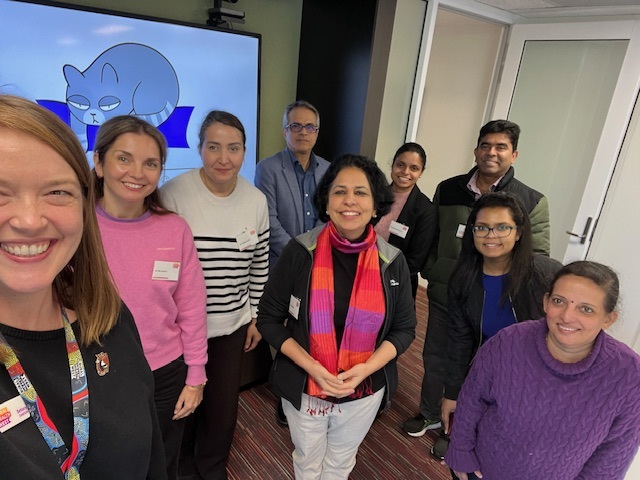
International Medical Graduates (IMGs) make up more than half of the GP workforce in rural and remote WA, keeping many communities from facing serious gaps in medical care. Without them, access to primary healthcare in country towns would look very different. But while their contribution is vital, the transition to working as a doctor in Australia is not always straightforward.
Adapting to a new health system, adjusting to different clinical practices, and settling into regional communities can be daunting. To smooth this transition, the Pre-Fellowship Program (PFP) provides doctors with structured support as they take their first steps into Australian general practice. The program, rolled out nationally in April 2024, helps doctors gain practical experience, build confidence, and prepare for Fellowship training.
Dr Ana Hamidi was among the first doctors to join the PFP. Originally from Iran, she had been working as a hospital doctor in Perth before making the move to Geraldton.
“Living in rural WA gives me a feeling that I am part of the community, something I never felt after living in Perth for 10 years,” Ana said.
She credits the PFP with helping her navigate the differences between general practice in Iran and Australia, and with easing her transition into a new professional and personal environment.
For Dr Vita Kushnir, who arrived in Esperance with her family earlier this year, the program has been invaluable.
“It has provided great support and is like a safety net for IMGs,” Vita said.
“It has helped me understand how general practice is structured within the Australian healthcare system, showed me how to overcome difficulties, and who to ask for help.”
Vita said she has quickly grown to love rural life.
“Despite its remoteness the area has good infrastructure for patient care, and there are many opportunities for my family and raising children.”
In Kalgoorlie, Dr Ugochi Samuel is also finding her feet. New to Australia, she said the PFP has helped her integrate into the medical community.
“It is a wonderful opportunity for learning,” she said.
“The program has provided guidance and insight which I have found quite helpful in my practice.”
Through the program, Ugochi attended the Aboriginal Health Conference in Perth, boosting her knowledge and confidence in working with Aboriginal communities.
Rural Health West works closely with participating doctors, their practices, and supervisors to tailor support offered through the program. Each doctor develops a supervision and professional development plan, ensuring they receive the right level of assistance and upskilling during the program. Doctors meet with a Rural Health West Medical Advisor before starting practice, giving them additional insight and resources as they map their career pathways.
The importance of programs like the PFP is highlighted by the demand for doctors across rural WA. In November 2024, Rural Health West recorded more than 1,000 rural GPs practising in WA for the first time. It was a 5.8 per cent increase on the previous year.
International Medical Graduates remain central to this workforce, making up 67.5 per cent of new GP arrivals in 2024 and accounting for 53.5 per cent of the total GP workforce across rural WA.
Rural Health West Chief Executive Officer Professor Catherine Elliott said the growth in rural GP numbers was encouraging but not enough to meet future demand.
“To have more than 1,000 rural GPs practising in Western Australia for the first time is a major milestone,” she said.
“But the projections we did as part of the WA Rural GP Summit in 2024 suggest that we will need at least 300 more rural GPs by 2030.”
So far, the PFP is playing its part. Across WA, 35 doctors are currently enrolled and since its launch, 11 participants have already progressed to Fellowship training with ACRRM or RACGP.
About the Pre-Fellowship Program
The Pre-Fellowship Program (PFP) is an Australian Government initiative supporting international doctors to begin their journey toward GP fellowship.
Who can apply: Non-vocationally registered doctors who have not previously joined a government workforce program, and who are Australian citizens, permanent or temporary residents.
Benefits: Access to a Medicare provider number, structured training and support, professional development, and orientation to the Australian healthcare system.
For more information, contact [email protected] or to attend an upcoming orientation, email [email protected]