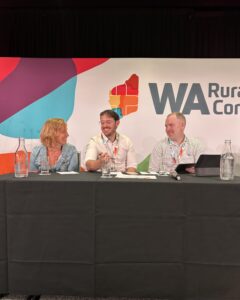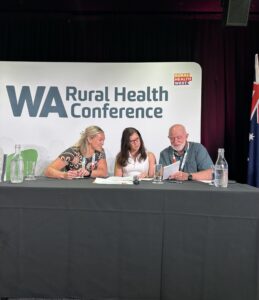
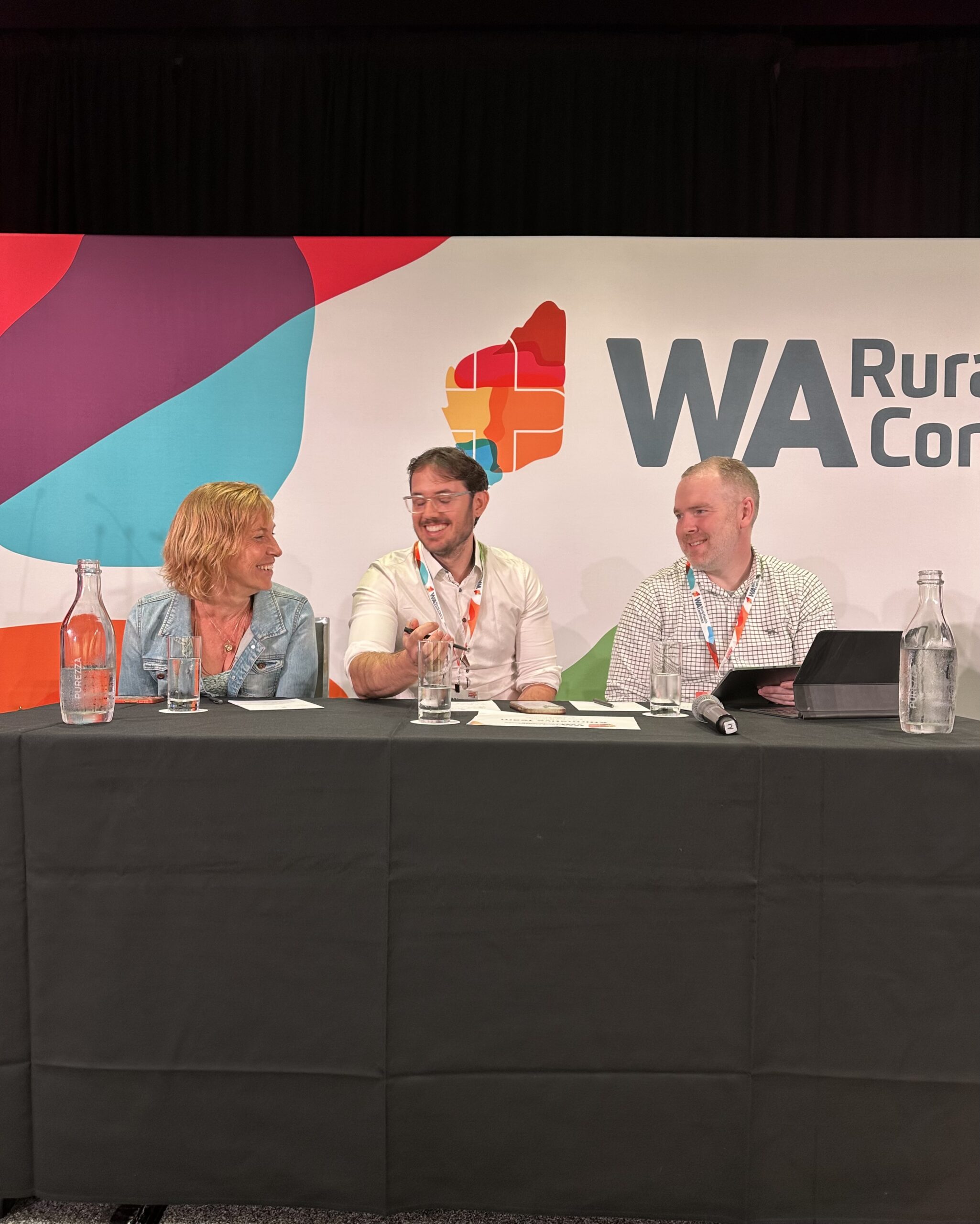
One of the standout moments from the 2025 WA Rural Health Conference was the inaugural WA Rural Health Great Debate – a lively, good-humoured and thought-provoking finale that had delegates on their feet and thinking hard about the future of rural health training.
The topic: “Rural training – a manicured pathway or a teaspoon of toughen up?”
Across WA and beyond, there’s increasing pressure to grow the rural health workforce. That means making rural training more appealing, more accessible, and more supported. But how do we balance structure and support with the need for resilience, adaptability and grit? The debate brought this tension to the fore in a way only a debate can – playful and punchy, but grounded in real lived experience.
Each interdisciplinary team featured a medical student or junior doctor, an allied health professional, and a seasoned rural GP – reflecting the team-based nature of rural healthcare delivery.
The affirmative team argued passionately that manicured pathways are not indulgent, but necessary. As they put it: “A manicured pathway is about mowing the verge, adding signposts and nurturing growth,” and argued that conference attendees were examples of survivor bias, noting that if the current system was working, we wouldn’t struggle to attract a workforce.
The opposing team reminded those present of the strength built through challenge and unpredictability. “Resilience comes not from comfort, but from the opportunity to fail, adapt and grow,” argued the team.
While both teams made compelling arguments, the judges ruled in favour of the affirmative, declaring we do indeed need a manicured pathway – as long as it leaves room for challenge, diversity and growth in a structured, supported environment.