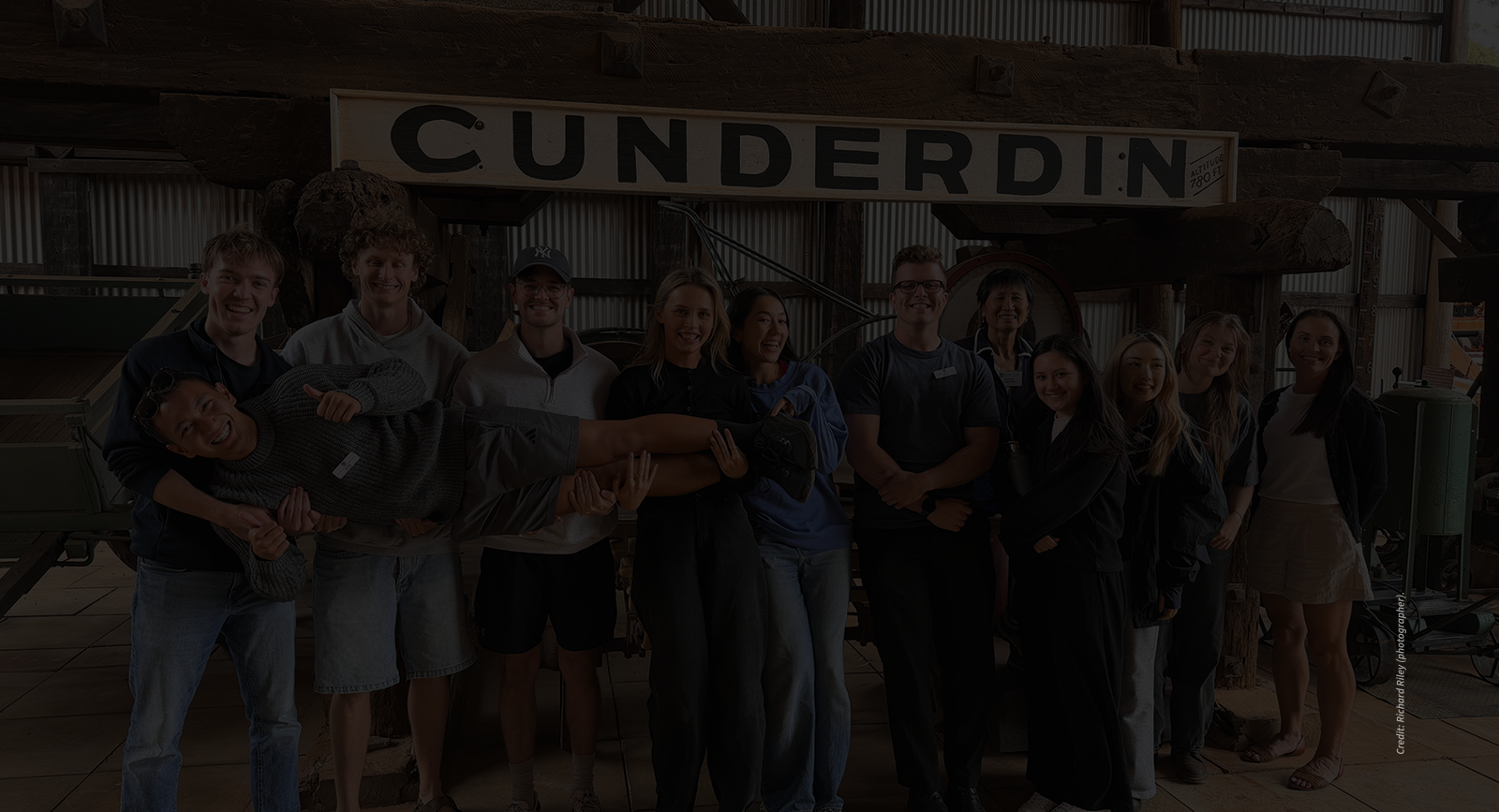
Over four days in March, 210 medical students dispersed across 14 Wheatbelt towns as part of the Wheatbelt Medical Student Immersion Program, gaining a first-hand understanding of rural life and the realities of delivering healthcare outside major cities.
A collaboration between the University of Notre Dame, Curtin University, Rural Health West and the Wheatbelt communities, the immersion program is helping to shape Western Australia’s future health workforce.
“The Wheatbelt Medical Student Immersion Program gives medical students a unique, first-hand experience of rural life,” Rural Health West Manager Workforce Solutions Beth McEwan said.
“It helps build a workforce that better understands rural health – one more likely to pursue careers in the country or deliver more informed care in metropolitan settings.”
Staying with local families and engaging with hospitals, schools and GP practices, students are immersed in the community, which brings the concept of country living to life.
For Merredin farmers Mal and Rochelle Willis, hosting students has become a meaningful way to share that experience. Since 2014, they have welcomed more than 20 participants, offering both practical insight and a glimpse into life on the land, including the risks and realities of working in paddocks and around machinery.
“We expose them to real-world scenarios – the hazards of working with machinery or in sheds – which helps them apply what they’re learning in a rural setting,” Rochelle said.
“But we also show them the quieter side – the stars, the space and the serenity. We share part of our world with them, which we hope stays with them into the future.” For some students, those experiences go on to shape entire careers.
Dr Jonathan Ackinclose describes himself as a “poster child” for the program. After participating as a student in 2012, he now works as Senior Medical Practitioner at Narrogin Health Service and District Medical Officer at Broome Health Service.
“Participating in the Wheatbelt immersion opened my eyes to rural life,” he said. “It made me realise there’s another way of doing things.”
One moment from that first trip has stayed with him. “On the day we arrived, the highway was closed, so the delivery truck couldn’t get through. There was no milk in the supermarket,” he recalled.
“The sign on the fridge door read, ‘no milk until Wednesday’. I thought it was fantastic – there were cows everywhere. “It really summed up the stoic rural attitude of making do.”
For Jonathan, rural practice offers both professional variety and a strong sense of purpose. “Compared to the city, the work is more varied and the teams are smaller,” he said.
“And the community is genuinely pleased to have a doctor who’s committed to being there.”
Immersion programs are critical in addressing the maldistribution of doctors across rural Western Australia. Research consistently shows that early exposure to rural medicine increases the likelihood that graduates will consider a rural career.
Even for those who choose metropolitan practice, the experience helps build understanding of the barriers rural patients face when accessing care.
The University of Notre Dame first year medical student Lincoln Bell visited Cunderdin during this year’s immersion.
“We had a wide range of experiences – from visiting the local emergency department and speaking with the town’s sole GP, to engaging with students in local schools,” Lincoln said.
“Each interaction provided insight into the rhythms and realities of a rural community.
“One of the most memorable moments came during an evening of lawn bowls at the recreation centre.
“This meant conversations could unfold naturally and we could ask what people enjoy about living there, how they came to the town. It helped reveal both the challenges and the deep sense of connection that underpin rural life.”
While Lincoln acknowledged he couldn’t truly appreciate the full complexities of rural healthcare in a single week, immersion programs create the conditions for meaningful learning.
“The experience helped to bridge the gap between theory and practice, leading to some “a-ha” moments where classroom knowledge takes on a human dimension.”
Breaking bread with his host family at the dinner table was especially insightful for Lincoln.
“They shared their experiences navigating the healthcare system – accessing a GP, travelling for specialist care, and managing the costs and distances involved. Their stories brought to life issues that in the classroom appear only as statistics, which really highlighted the human side of healthcare.
“For future students, my advice is simple: embrace the opportunity. Speak with as many people as possible and seek out diverse perspectives. These conversations will often provide insights far beyond what can be learned in a lecture theatre.”